Pocket CFO — a personal finance manager inside Telegram
Built a client an app that runs his whole budget on its own. It's not a regular tracker where you type in every expense by hand. An agent pulls the data itself, does the math, and tells him what's going on.
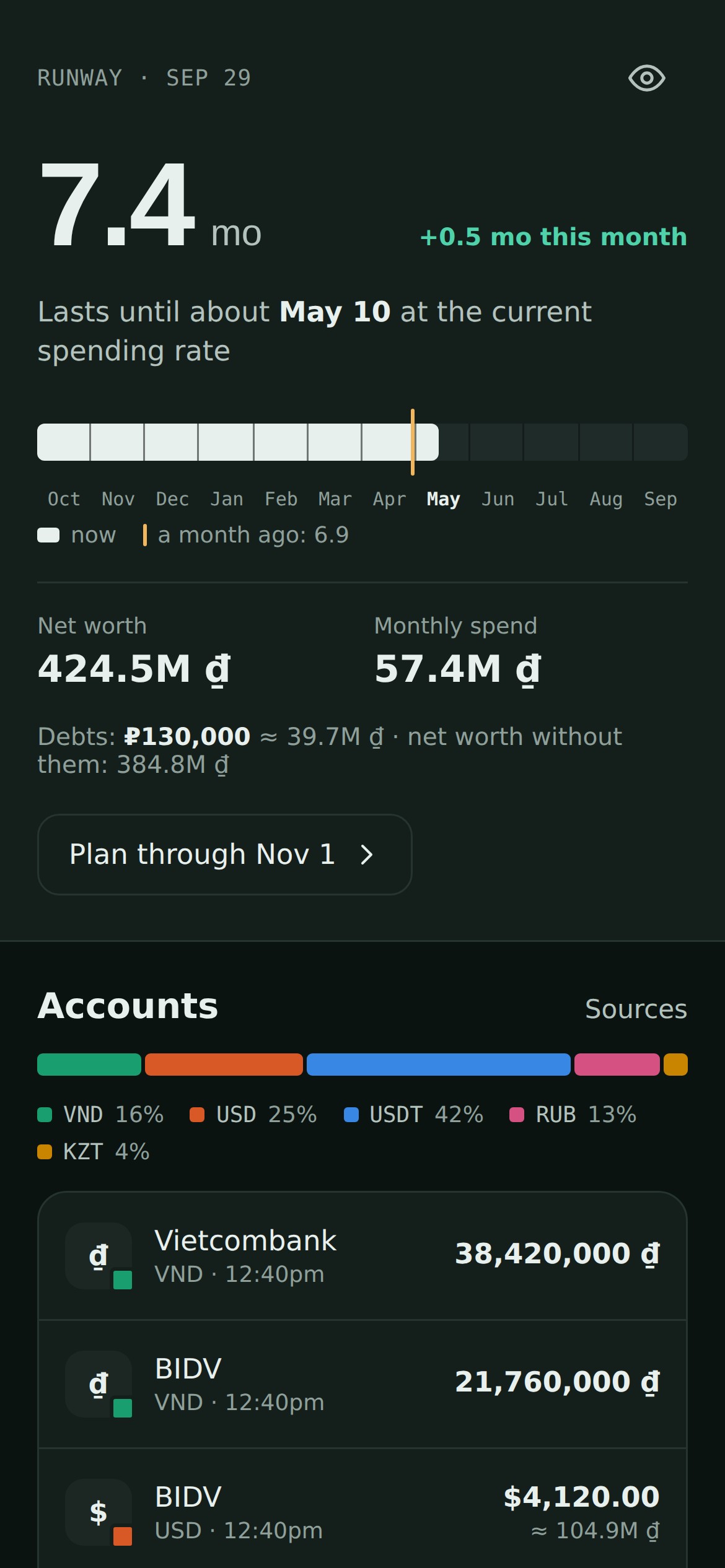
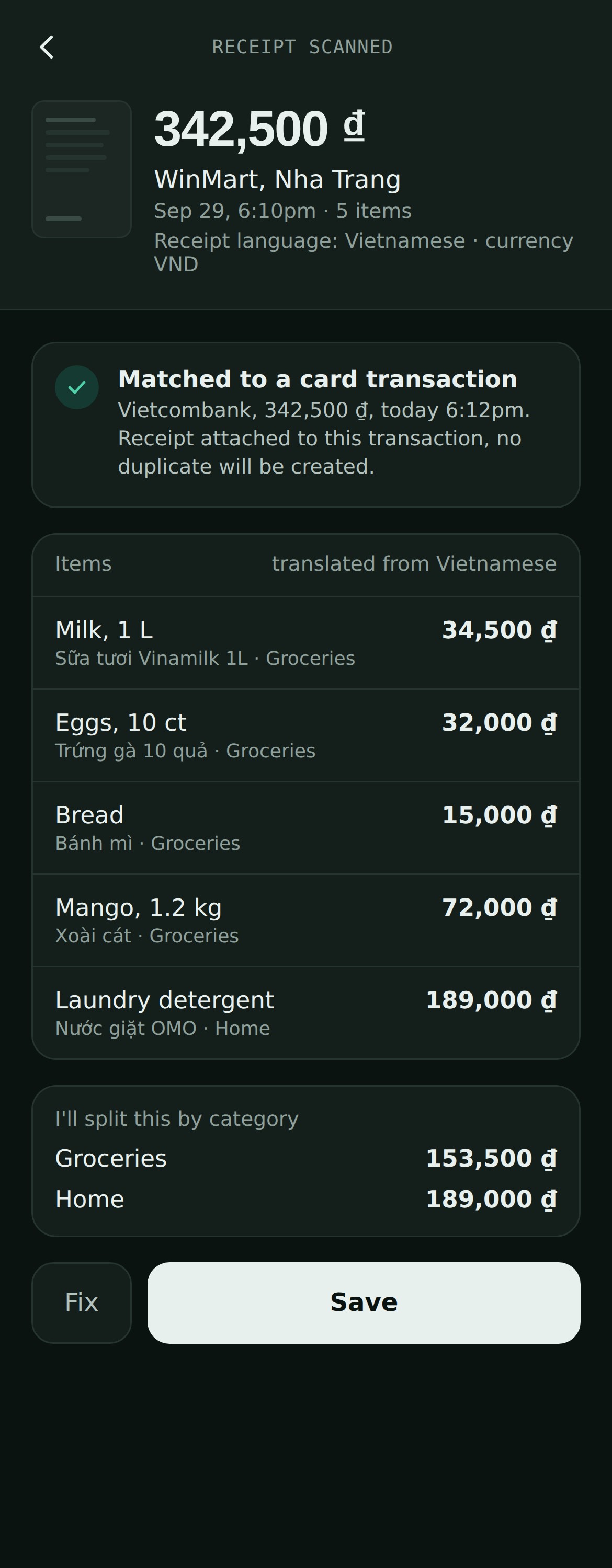
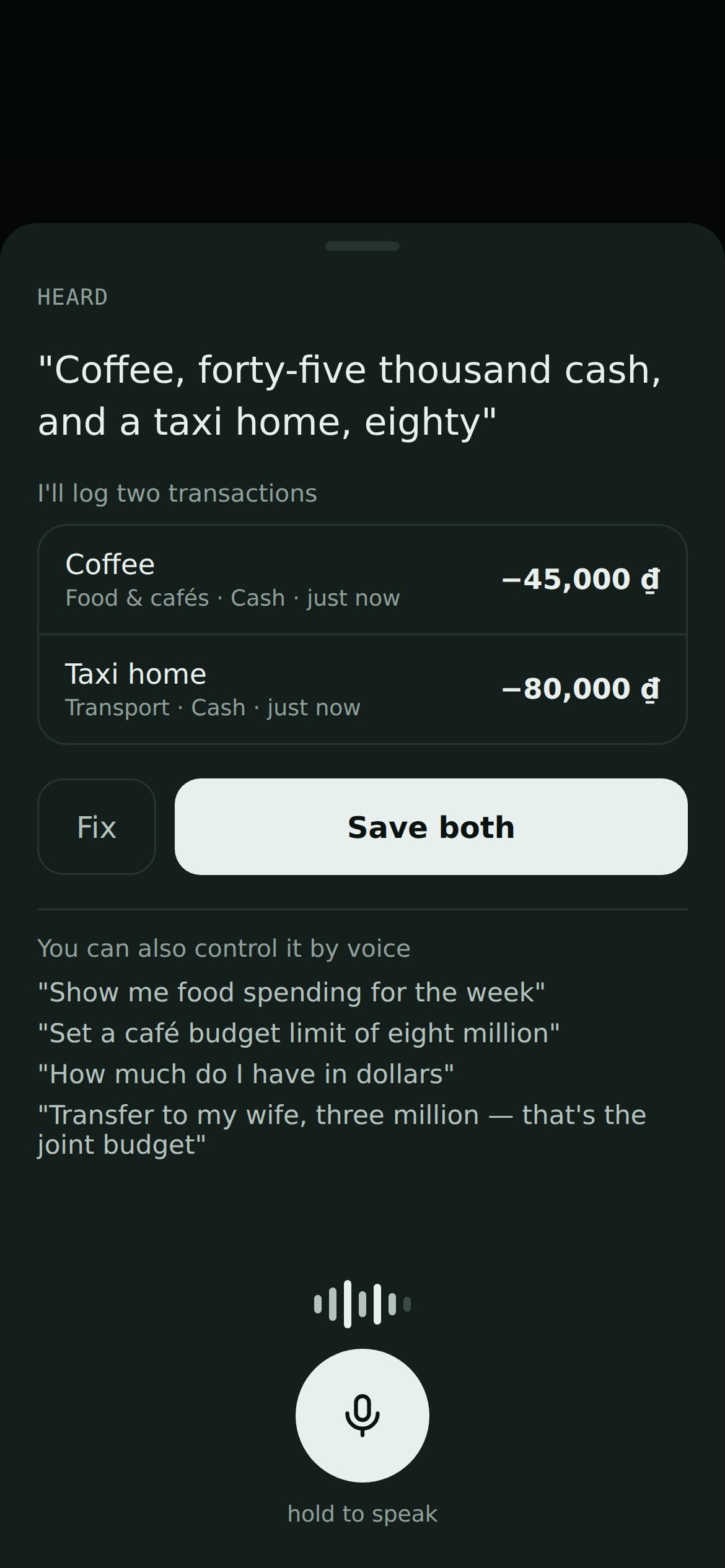
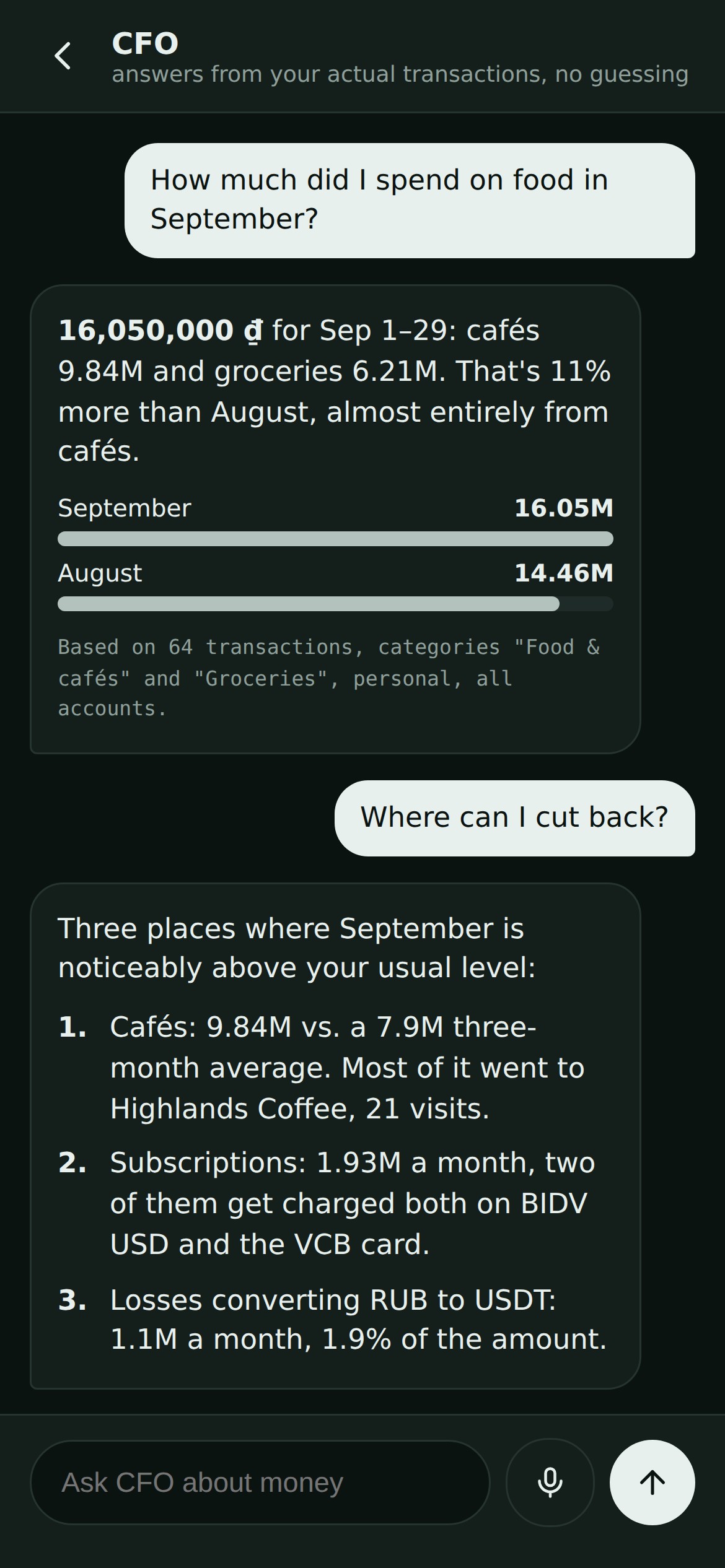
Mockup, amounts, and names are placeholders.
Money in five currencies, cards at different banks, some spending in cash and QR transfers. Nobody keeps that up by hand, you quit on day two. Banks don't give you a real API, just emails and push notifications. The iPhone won't let an app read someone else's texts. Regular trackers expect you to type everything in yourself, which is exactly why they don't work.
What it does:
- Pulls transactions straight from the bank emails, parses three different formats, strips duplicates.
- Log an expense by voice, right inside the app, no typing.
- Photograph a receipt in any language or currency, and it reads it line by line and sorts it into categories. A long receipt can be shot in several frames.
- Sorts spending into categories on its own: by vendor, by memory, by keyword. Anything it can't place gets a quick voice check.
- Tracks net worth in one currency using daily exchange rates, shows how long the money lasts at the current pace.
- Flags it when spending runs over, sends a weekly summary.
- Answers money questions in chat. And this is what matters: it only answers from real numbers in the database, every figure traces back to an actual transaction. No made-up totals, no hallucinating.
The app pulls the data itself, does the math, flags what's off. That took the most work: building it so the AI doesn't make things up.
Stack: a Telegram Mini App on React and Tailwind, backend on Node and Vercel, database on Supabase, voice and receipt recognition plus the advisor itself on OpenAI's models, Gmail for pulling bank emails. About seven hundred automated tests, all running in production.